
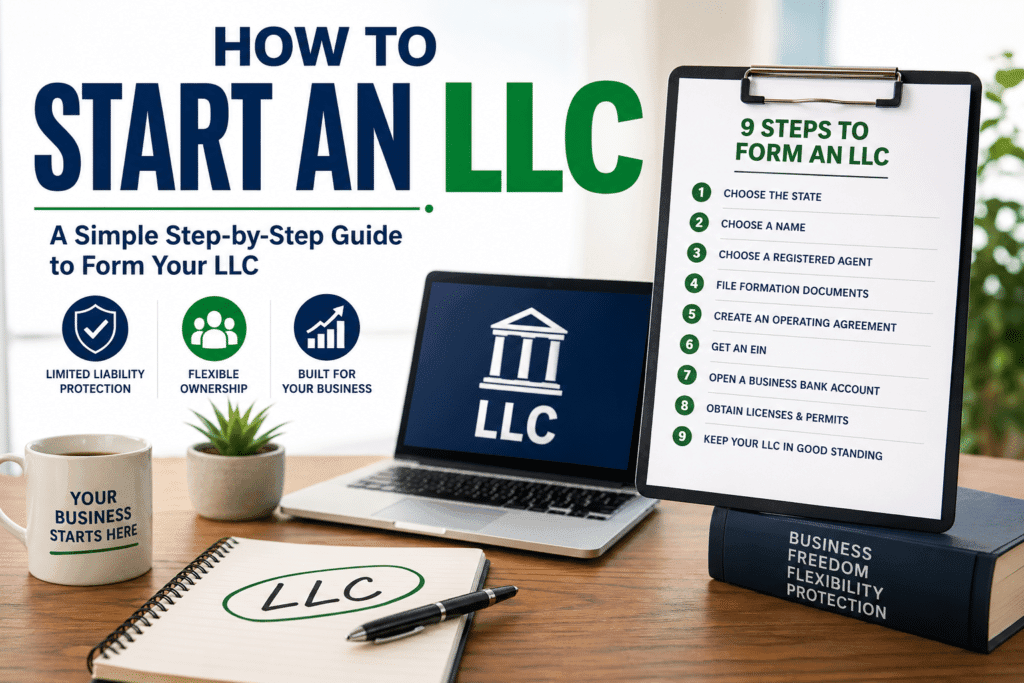

Starting a limited liability company (LLC) is a straightforward process in most states. An LLC can provide personal liability protection while offering a flexible business structure for one or more owners.
| LLC + Registered Agent Service 1/yr | LLC + Registered Agent Service 1/yr |
| Northwest Registered Agent $39 + state fee | LegalZoom $249 + state fee |
Although filing requirements and fees vary by state, the basic process is similar throughout the United States. Here are nine steps to start an LLC.
Step 1. Choose the State Where You Will Form Your LLC
Most small business owners should form their LLC in the state where they live and conduct business. If you form an LLC in another state but operate primarily in your home state, you may need to register as a foreign LLC and pay fees in both states.
States such as Delaware, Nevada, and Wyoming are sometimes promoted as favorable places to form an LLC, but they are not necessarily the best choice for a business that operates elsewhere.
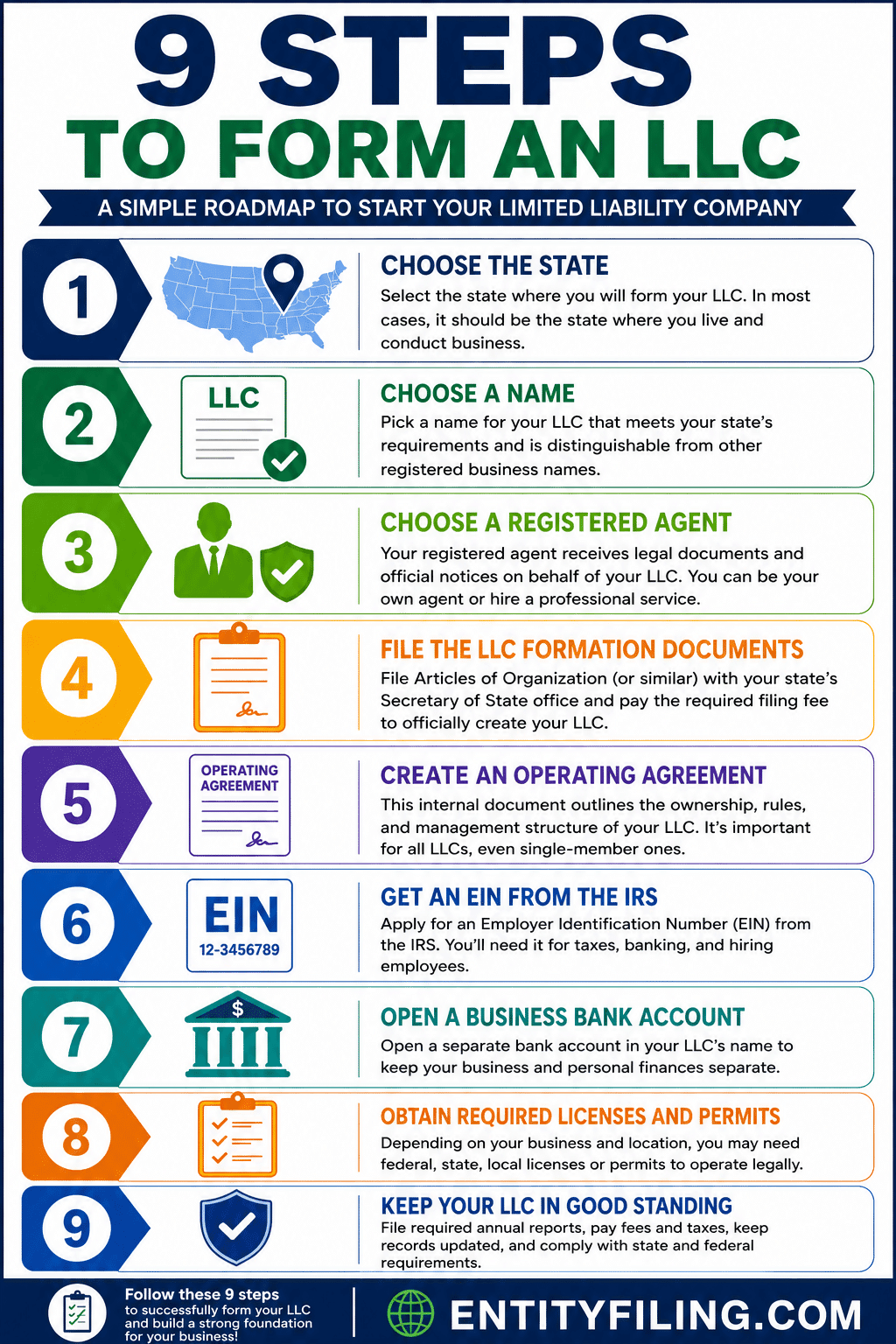
Step 2. Choose a Name for Your LLC
Your LLC needs a name that complies with your state’s naming requirements. Most states require the name to include “Limited Liability Company,” “LLC,” or an approved abbreviation.
The name must also be distinguishable from other business names already registered in the state. Before filing your LLC, use your state’s online business name search to check whether the name you want is available.
Step 3. Choose a Registered Agent
Every LLC must have a registered agent in the state where it is formed. The registered agent is responsible for receiving legal documents, government notices, and other official correspondence on behalf of the LLC.
You can often serve as your own registered agent if you meet your state’s requirements. You can also appoint another eligible individual or hire a professional registered agent service.
Step 4. File the LLC Formation Documents
To officially create your LLC, file the required formation document with the appropriate state agency, usually the Secretary of State. Depending on the state, this document may be called the Articles of Organization, Certificate of Formation, or Certificate of Organization.
You will typically provide the LLC’s name, business address, registered agent information, and basic management information. A state filing fee is usually required.
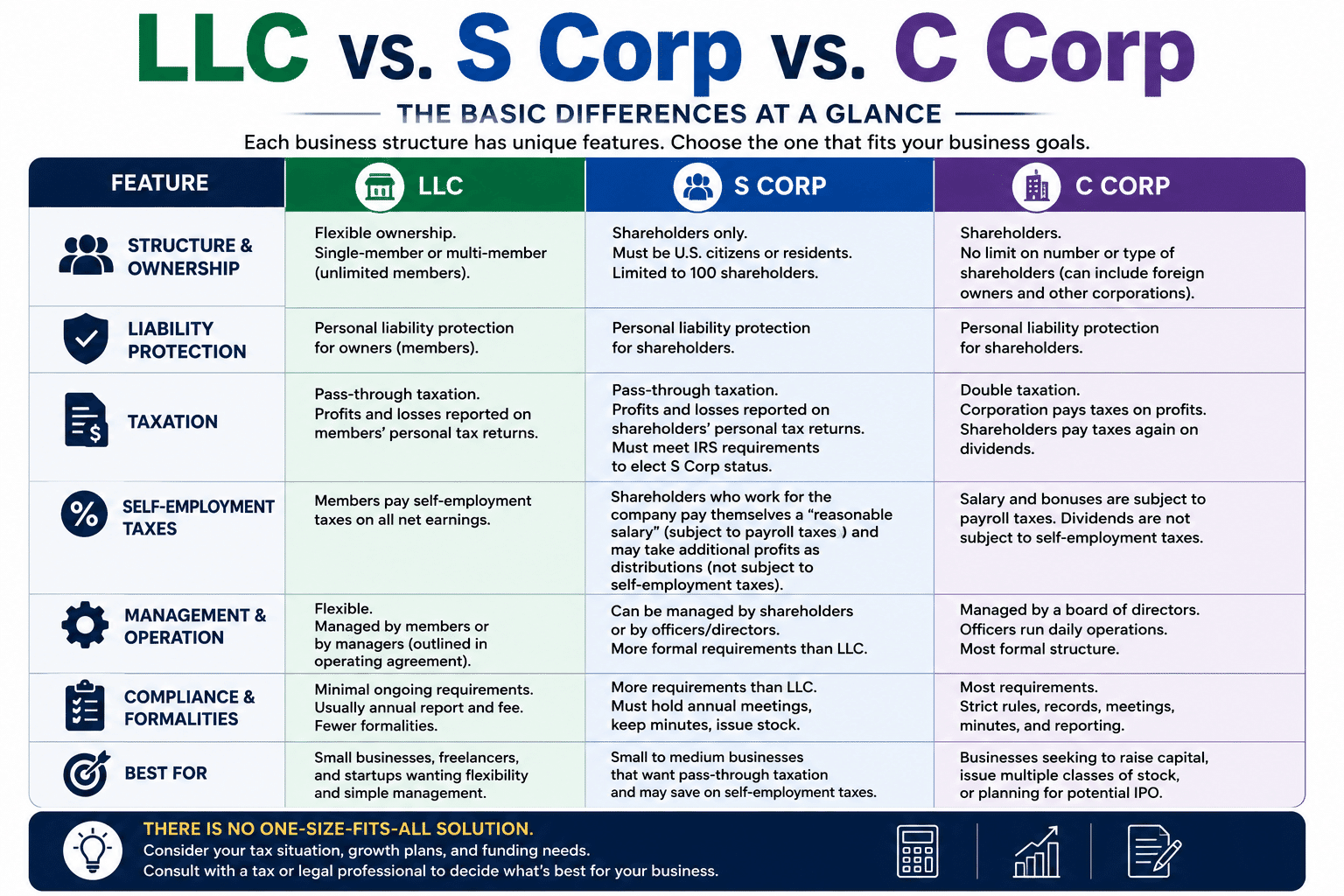
Step 5. Create an LLC Operating Agreement
An operating agreement establishes the rules for how your LLC will operate. It can cover ownership percentages, management responsibilities, voting rights, distribution of profits, and procedures for adding or removing members.
Not every state requires an operating agreement, but creating one is recommended even for a single-member LLC. The operating agreement is generally an internal document and is not filed with the state.
Step 6. Get an EIN from the IRS
An Employer Identification Number (EIN) is a federal tax identification number issued by the IRS. It is similar to a Social Security number but is used to identify a business for federal tax purposes.
Most LLCs should obtain an EIN. You may need one to hire employees, open a business bank account, file certain tax returns, or establish accounts in the LLC’s name. EINs can be obtained directly from the IRS at no charge.
Step 7. Open a Business Bank Account
Once your LLC has been formed and you have an EIN, consider opening a separate bank account for the business. Keeping business and personal finances separate makes bookkeeping and tax preparation easier.
Maintaining separate finances also helps demonstrate that the LLC is an independent legal entity rather than simply an extension of the owner’s personal finances.
Step 8. Obtain Required Business Licenses and Permits
Forming an LLC does not automatically give you permission to conduct every type of business. Depending on your industry and location, you may need federal, state, county, or city licenses and permits.
Requirements can vary significantly by business activity. Check with the appropriate state and local agencies to determine which licenses, permits, or registrations apply to your LLC.
Step 9. Keep Your LLC in Good Standing
After forming your LLC, you will need to comply with your state’s ongoing requirements. Many states require LLCs to file annual or biennial reports and pay associated filing fees or taxes.
Keep your registered agent information and business records current, renew required licenses, and meet state and federal tax deadlines. Staying current with these requirements will help keep your LLC in good standing.
Quick Summary: 9 Steps to Start an LLC
- Choose the state where you will form your LLC.
- Choose an available LLC name.
- Choose a registered agent.
- File your LLC formation documents.
- Create an operating agreement.
- Get an EIN from the IRS.
- Open a business bank account.
- Obtain required licenses and permits.
- Complete ongoing LLC compliance requirements.